
Every business wants more visibility, more leads, and more sales. The question is how to achieve that without wasting time or budget.
Two of the most common options are SEO vs. paid ads. While one delivers traffic almost immediately but requires continuous spending, the other takes longer to gain momentum but can keep attracting visitors long after the initial work is done.
Neither approach is universally better. The right choice depends on your goals, budget, competition, and how quickly you need results.
Understanding the strengths of each will help you invest in the channels that support sustainable growth. That’s what we want to break down in this article.
Table of Contents
What Is SEO?
Search engine optimization (SEO) is the process of improving a website so it appears more prominently in organic search results. Instead of paying for every click, businesses earn visibility by publishing useful content, improving their website, and demonstrating authority on the topics they cover.
Strong SEO isn’t about doing just one thing the right way. It combines keyword research, writing content that satisfies search intent, having a logical website structure, internal linking, technical performance, and quality backlinks. Together, these signals help search engines, such as Google, understand what your pages are about and when they should appear in search results.
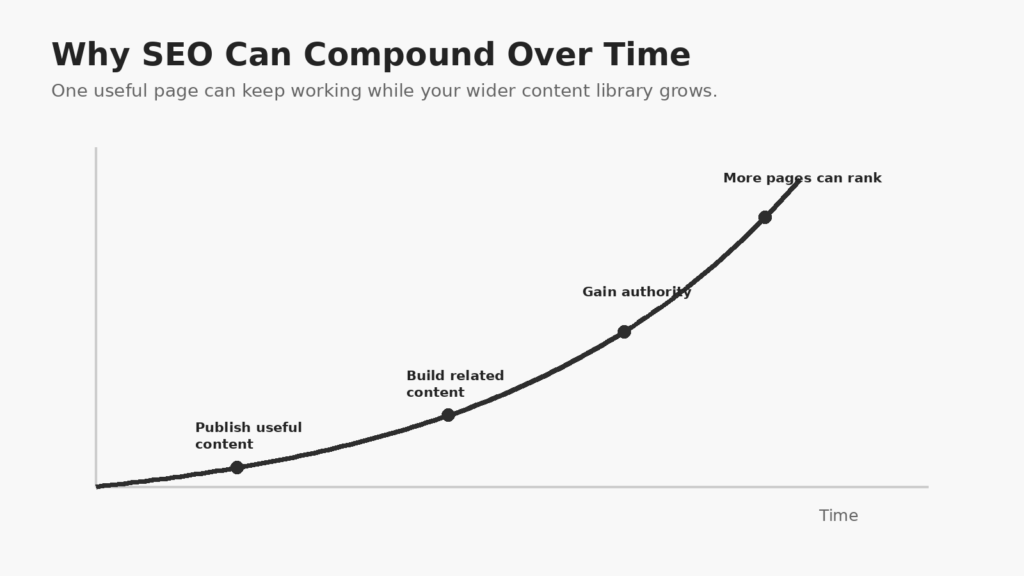
One reason businesses continue investing in SEO is that its value builds over time. A helpful page can generate qualified traffic long after it’s published, and every new piece of relevant content strengthens the overall authority of the website. As that authority grows, ranking for related keywords often becomes easier.
Google also provides guidance on how websites can improve their visibility in search results through its Search Central documentation
If you’re planning a long-term SEO strategy, building topical authority should be one of your priorities. We’ll explore that in our guide on How to Build Topical Authority with Content Marketing.
What Are Paid Ads?
Paid ads are sponsored placements that appear on search engines and social media platforms. Instead of earning visibility through organic rankings, businesses pay to reach their target audience.
Businesses can learn more about campaign types, bidding strategies, and ad formats in the official Google Ads Help Center.
The most common platforms for paid ads include:
- Google Ads: Displays ads in Google Search results and across the Google Display Network. Best for capturing users actively searching for products or services.
- Facebook and Instagram Ads: Help businesses reach audiences based on demographics, interests, and online behavior. They’re commonly used to build brand awareness and generate leads.
- LinkedIn Ads: Designed for Business-to-Business (B2B) marketing. They allow businesses to target professionals by job title, industry, company size, and other career-related attributes.
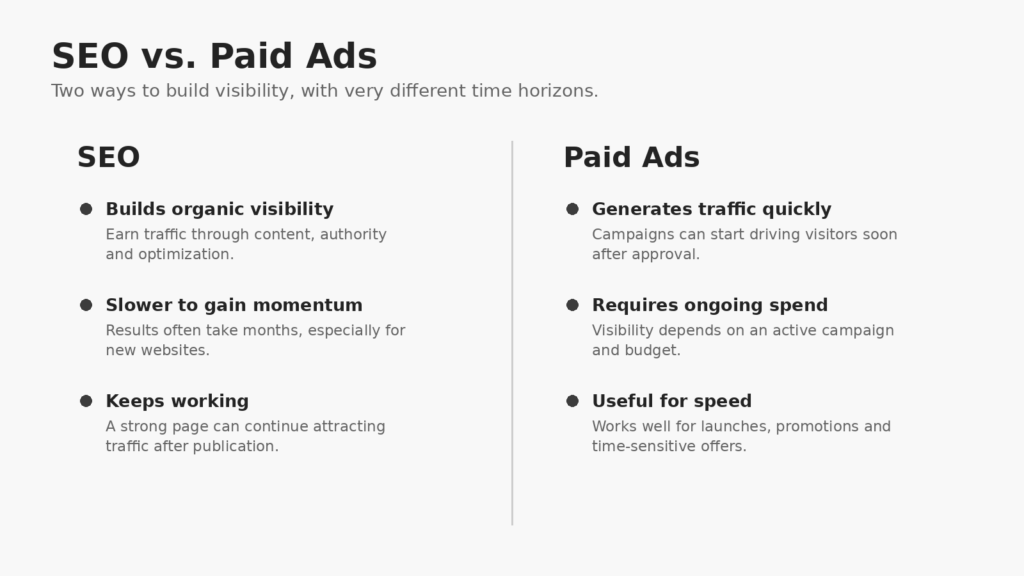
The biggest advantage of paid advertising is speed. If you set a campaign today, it can begin driving traffic as soon as it’s approved. However, once your budget runs out, your visibility usually disappears with it.
SEO vs. Paid Ads: A Side-by-Side Comparison
To help you understand these two properly, the table below will help.
| Factor | SEO | Paid Ads |
| Cost | Requires ongoing investment in content and optimization, but no cost per click. | You pay for each click, impression, or conversion. |
| Speed | Results typically take months. | You can start seeing results within hours. |
| Sustainability | Content can generate traffic long after publication. | Traffic stops when the campaign ends. |
| Trust | Organic results often receive higher user trust. | Some users skip sponsored listings. |
| ROI | Usually improves over time as rankings grow. | Depends on campaign performance and budget. |
| Scalability | Expands as your website gains authority. | Scales with increased advertising spend. |
| Lead Quality | Attracts users actively searching for solutions. | Can be highly targeted but varies by campaign quality. |
| Long-Term Value | Continues delivering value from existing content. | Limited to the duration of the campaign. |
When SEO Is the Better Choice
SEO is the better investment when your goal is sustainable growth rather than immediate traffic. Although it requires time and consistent effort, the long-term benefits often outweigh the initial investment.
Choose SEO if you want to:
- Build authority in your industry.
- Generate consistent organic traffic.
- Reduce customer acquisition costs over time.
- Create evergreen content that continues attracting visitors.
As your website covers related topics in depth, it develops topical authority. Search engines gain confidence in your expertise, making it easier for new pages to rank for relevant keywords. This creates a compounding effect that paid advertising cannot replicate.
Learn how to build this advantage in our guide on How to Build Topical Authority with Content Marketing.
When Paid Advertising Makes More Sense
Paid advertising is the better choice when speed matters. Instead of waiting for organic rankings (which can take months or even years), you can put your offer in front of potential customers almost immediately.
Paid ads work well for:
- Product launches: Generate awareness and drive traffic from day one.
- Seasonal promotions: Reach customers during limited-time sales, holidays, or special events.
- New websites: Attract visitors while your SEO strategy gains momentum.
- Time-sensitive campaigns: Promote webinars, events, limited offers, or new services with a clear deadline.
For businesses that need quick results, paid advertising fills the gap while long-term SEO efforts begin to deliver.
Why the Best Strategy Combines SEO and Paid Ads
SEO and paid ads are often presented as competing strategies, but they work best together.
Paid ads generate immediate traffic, making them useful for testing offers, landing pages, and messaging. SEO builds long-term visibility by attracting organic traffic that doesn’t depend on continuous ad spend.
The two channels can also strengthen each other. Here’s how:
High-performing paid keywords can uncover search terms worth targeting with SEO. At the same time, well-optimized content improves landing page quality, increases user trust, and supports better conversion rates.
Businesses looking to strengthen their organic presence should also invest in Digital PR. High-quality backlinks and brand mentions help improve website authority and support long-term SEO performance.
AI can also streamline keyword research, content planning, and optimization, making it easier to scale your content marketing efforts without sacrificing quality.
Related guides:
- What Is Digital PR and Why Does Your Business Need It?
- 7 Ways AI Can Improve Your Content Marketing Strategy
Common SEO vs. Paid Ads Mistakes You Should Avoid
Many businesses struggle because they rely too heavily on one channel or set unrealistic expectations.
Common mistakes include:
- Turning off paid campaigns before SEO starts generating consistent traffic.
- Expecting SEO to produce meaningful rankings within a few weeks.
- Publishing low-quality content that fails to satisfy search intent.
- Tracking clicks but ignoring conversions and business outcomes.
- Treating SEO and paid ads as separate strategies instead of using them together.
The most effective marketing strategies combine short-term wins from paid advertising with the long-term value of SEO.
Ready to build a stronger organic growth strategy?
We help businesses turn SEO, content, and website structure into a sustainable source of traffic and leads.
Frequently Asked Questions
Is SEO better than Google Ads?
Neither is inherently better. Google Ads delivers immediate traffic, while SEO builds sustainable organic visibility. The right choice depends on your budget, goals, and timeline.
Is SEO worth it for small businesses?
Yes. SEO helps small businesses attract qualified traffic without paying for every click. Although results take time, a strong SEO strategy can lower customer acquisition costs over the long term.
How long does SEO take?
Most websites begin seeing measurable improvements within three to six months. Competitive industries or new websites may take longer to achieve consistent rankings.
Can SEO replace paid advertising?
Not entirely. SEO is ideal for long-term growth, but paid advertising remains valuable for product launches, promotions, and campaigns that require immediate visibility.
Should startups invest in SEO or PPC (Pay-Per-Click) first?
Startups often benefit from using both. PPC can generate traffic and leads while SEO builds a foundation for long-term organic growth. As SEO gains traction, businesses can reduce their reliance on paid advertising.
Which offers a better long-term return on investment?
SEO generally delivers a stronger long-term ROI because well-optimized content can continue generating traffic and leads without ongoing advertising costs. Paid ads provide value while campaigns are active but require continuous investment.
Conclusion
The debate between SEO and paid ads isn’t about choosing a single winner. Each serves a different purpose.
If your priority is immediate traffic, paid advertising can deliver results quickly. If your goal is sustainable growth, SEO is the stronger long-term investment. A well-structured website, valuable content, and consistent optimization can continue attracting qualified visitors long after a page is published.
The most effective marketing strategies combine both approaches. Paid ads provide short-term visibility, while SEO builds lasting authority and organic traffic. Strengthening your strategy with quality content, Digital PR, and selective AI-powered workflows creates a marketing system that continues delivering value as your business grows.